FUTURE HEIRLOOMS
FUTURE HEIRLOOMS
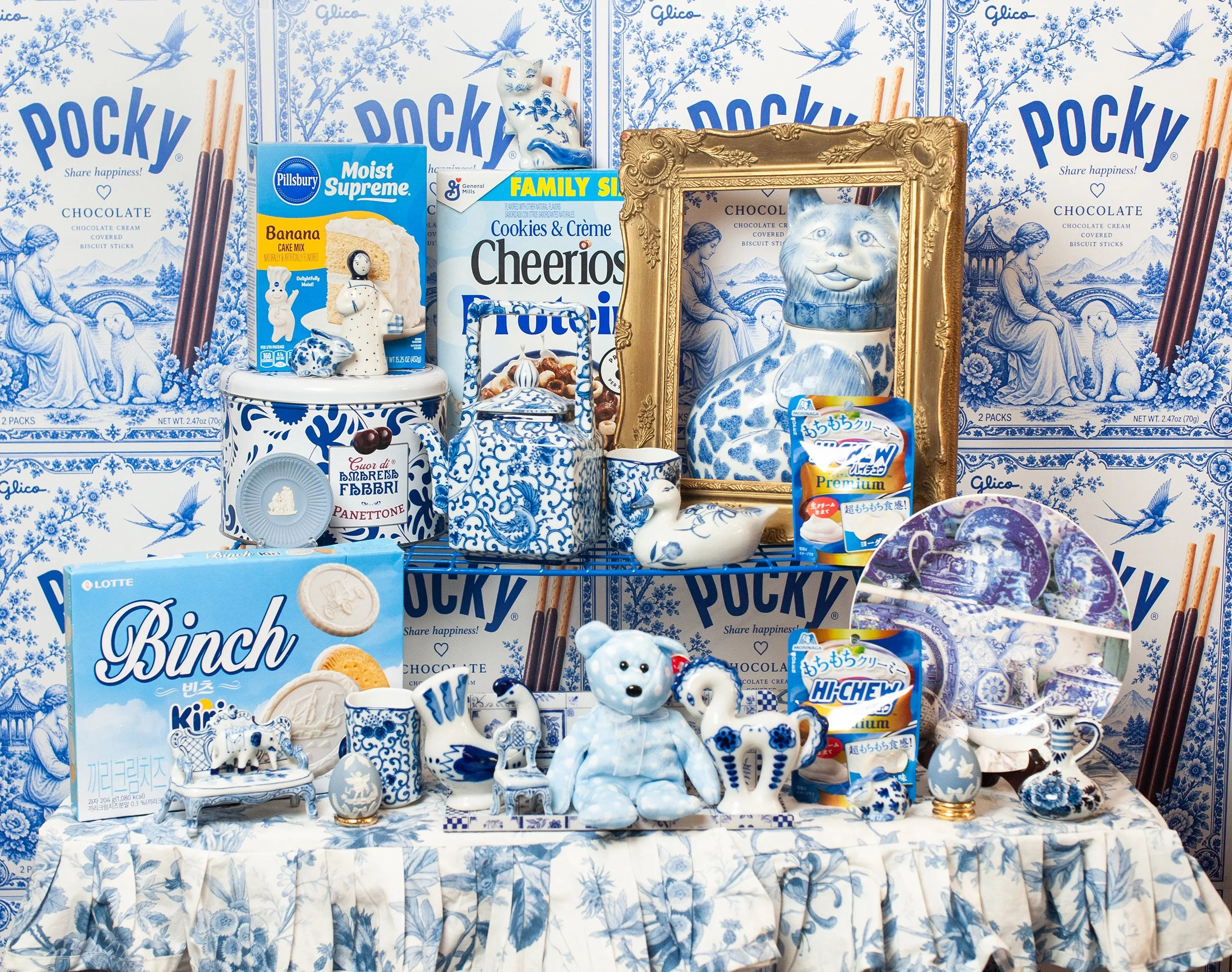
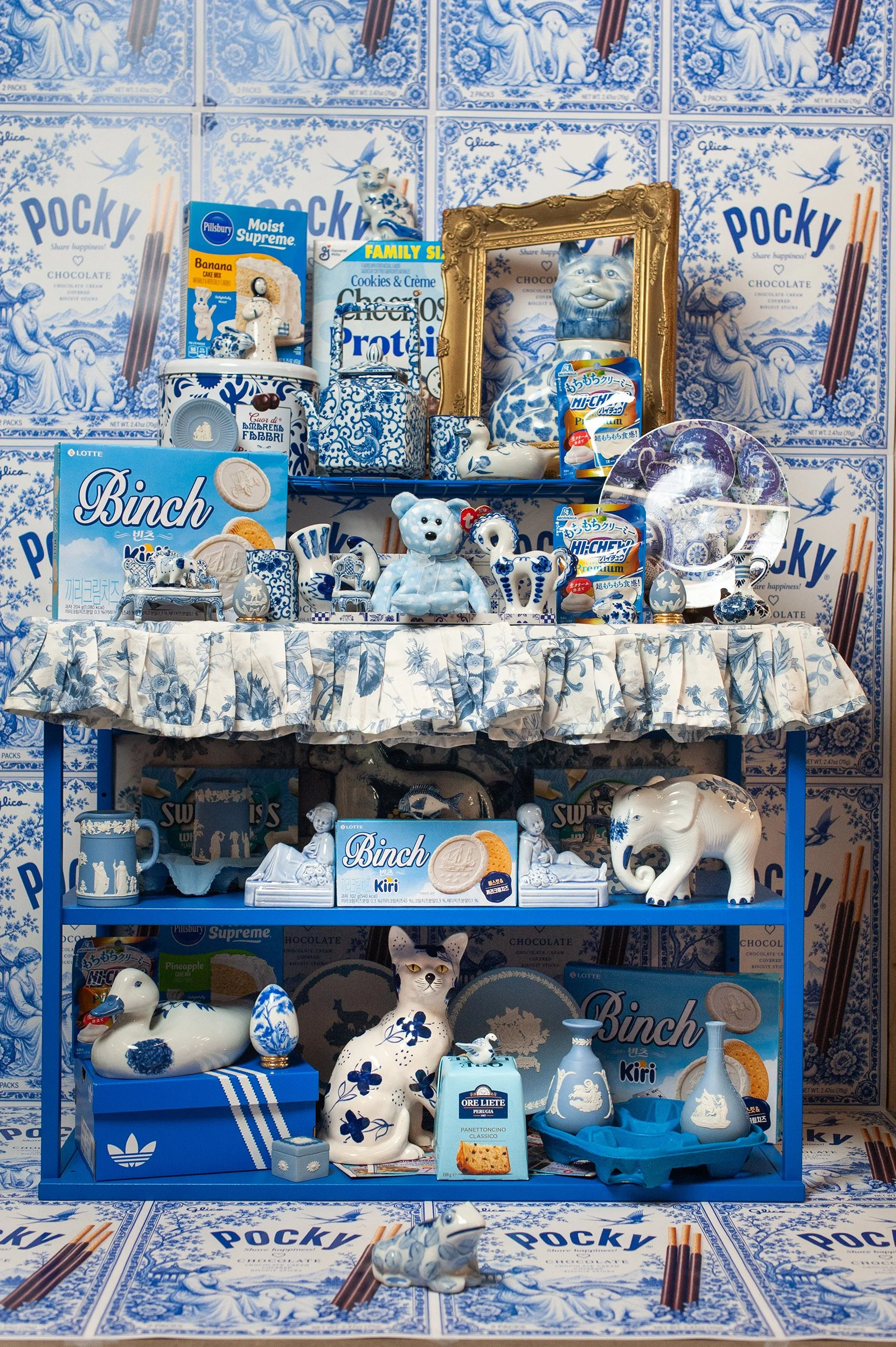
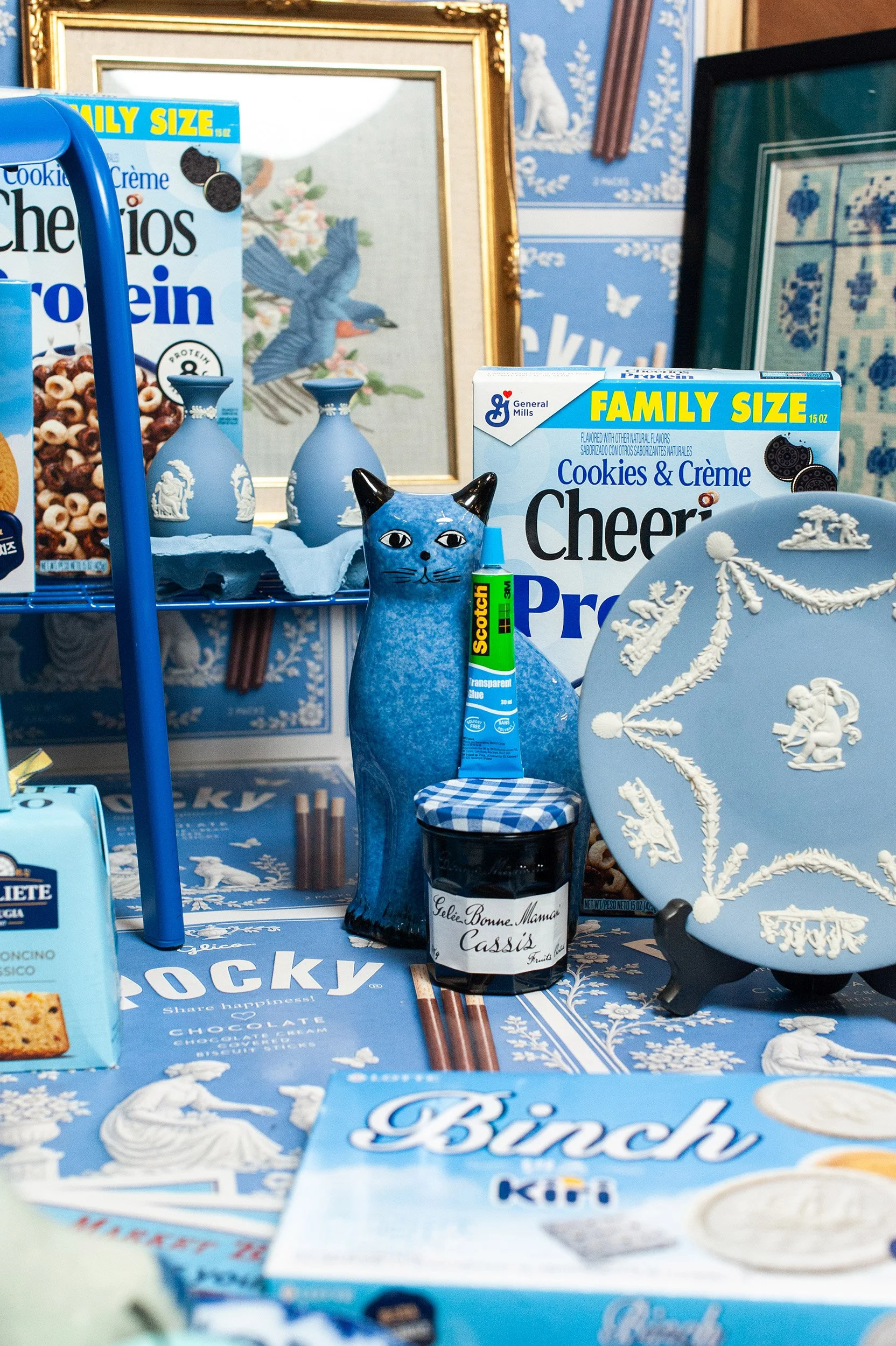
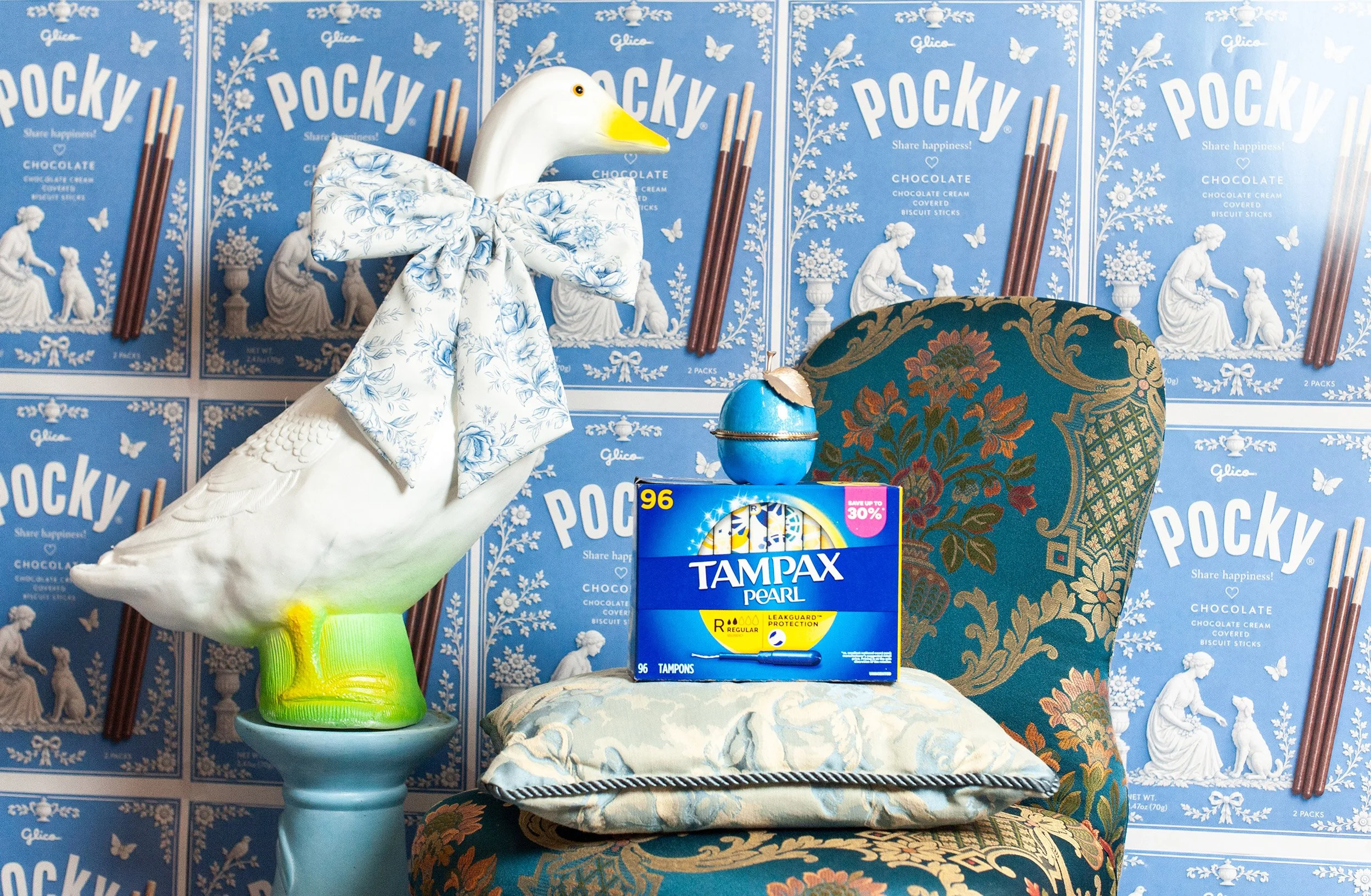
Drawing on the visual language of seventeenth-century Dutch still life, Amy Broch constructs contemporary portraits of abundance from the objects we desire, collect, consume and discard.
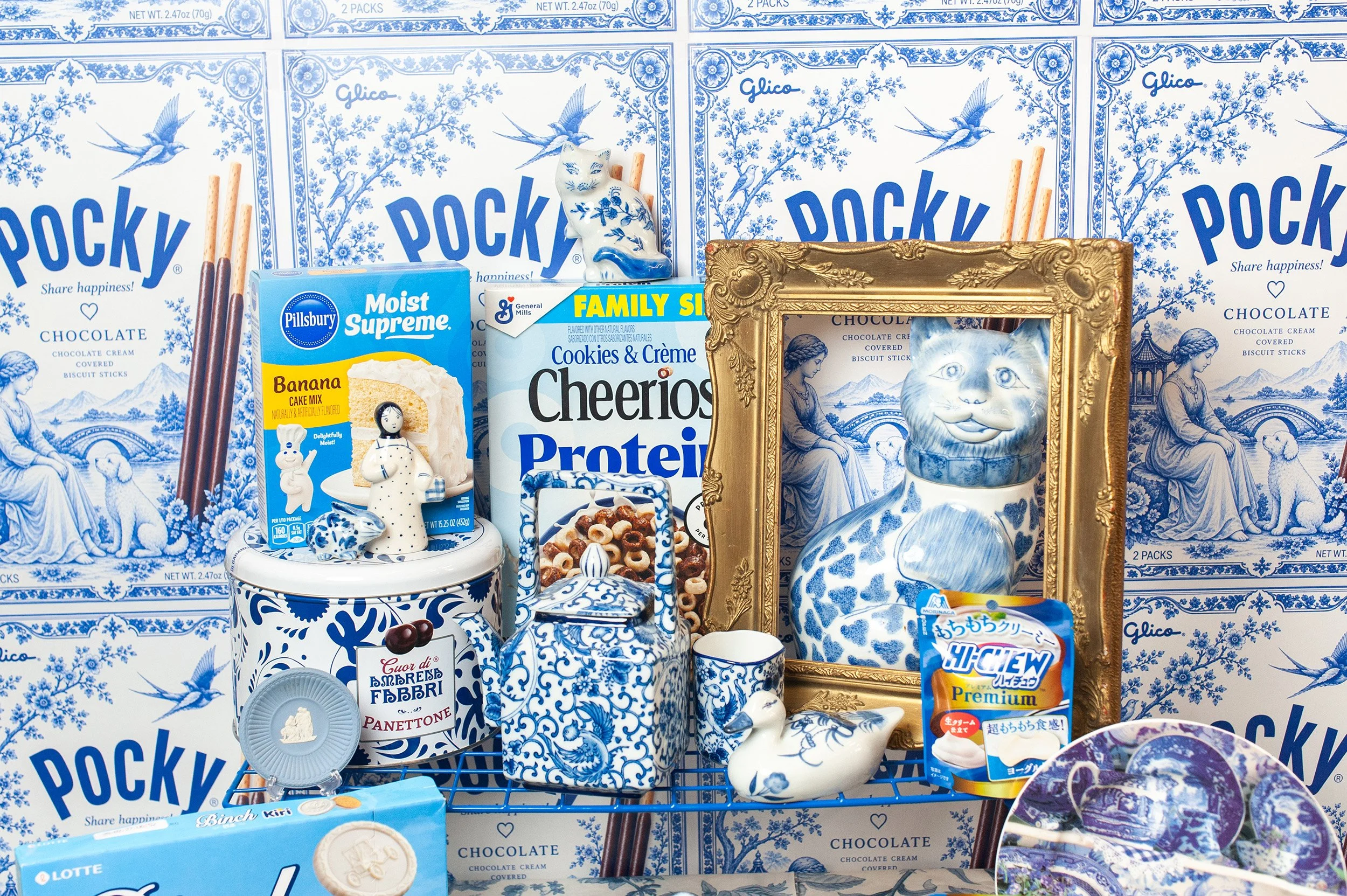
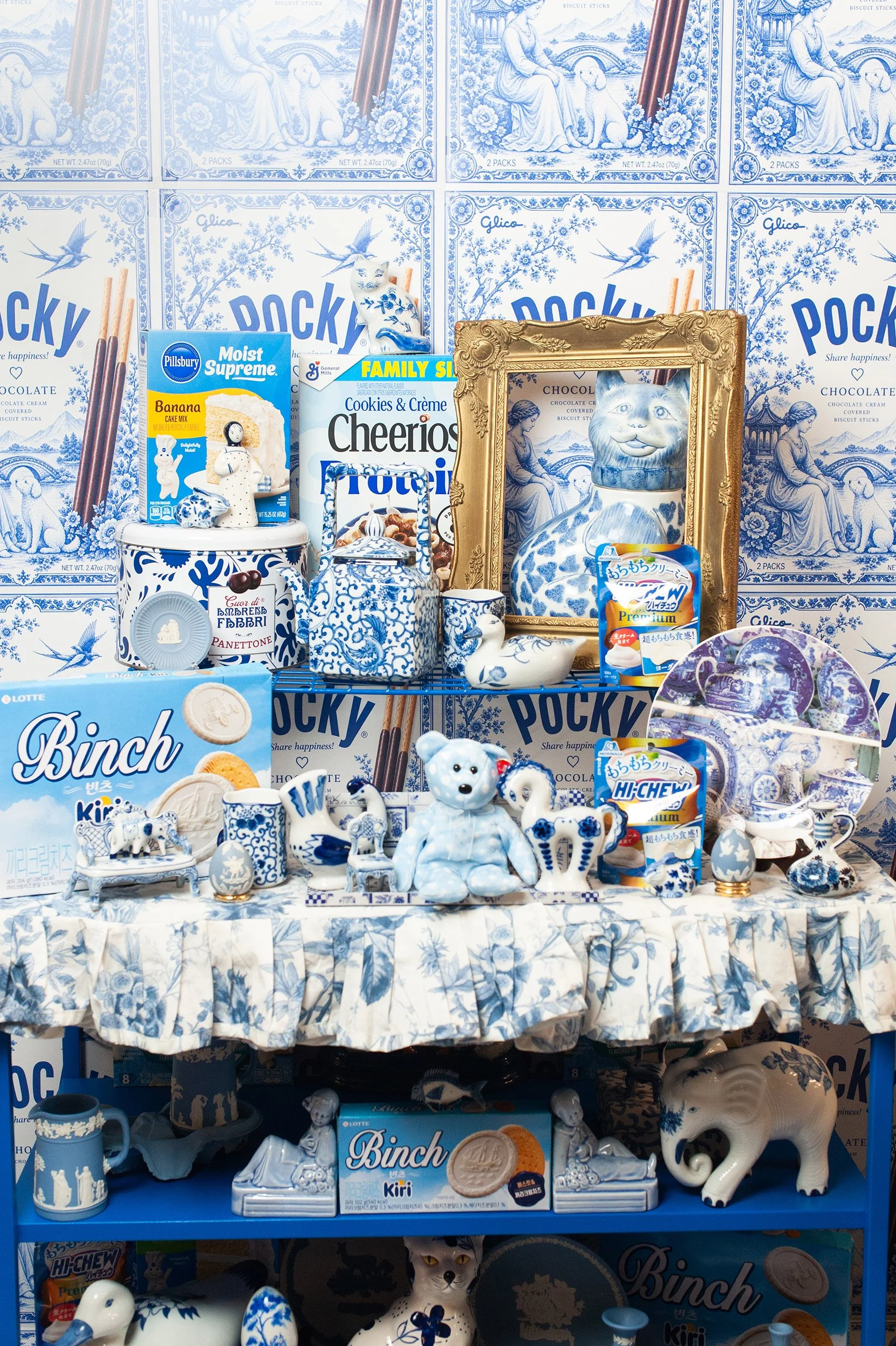
Where Dutch pronkstilleven assembled imported porcelain, silver, fruit, flowers and other luxuries as elaborate displays of wealth and global trade, Broch replaces and disrupts these traditional symbols of value with the material culture of the present. Pocky, Cheerios, confectionery and supermarket packaging sit unapologetically alongside Wedgwood, blue-and-white ceramics, decorative objects and collected curiosities.
The distinction between precious and disposable begins to collapse.
Blue and white runs through the work as both aesthetic and history. A visual language that travelled from Persian cobalt and Chinese porcelain through European imitation, Delftware and British ceramics now encounters the graphics of global consumer culture. Packaging becomes pattern. Branding becomes ornament. The supermarket box is afforded the same compositional attention as the porcelain vase.
Like the Dutch still lifes that inspire them, these photographs are seductive but not entirely innocent. Beneath their abundance sit questions about consumption, status, taste and the value we assign to things. Why is one object preserved for centuries while another is discarded moments after use? When does an ordinary possession become an antique? And what will the objects surrounding us now reveal about what we valued?
Broch treats contemporary consumption as a future archaeology. The cereal box and ceramic figurine coexist as evidence; both are artefacts of desire, capable of telling stories about commerce, aspiration, pleasure and everyday life.
These are still lifes for an age in which abundance arrives branded, boxed and ready to consume.